Five Budget Condenser Mics That Punch Way Above Their Price
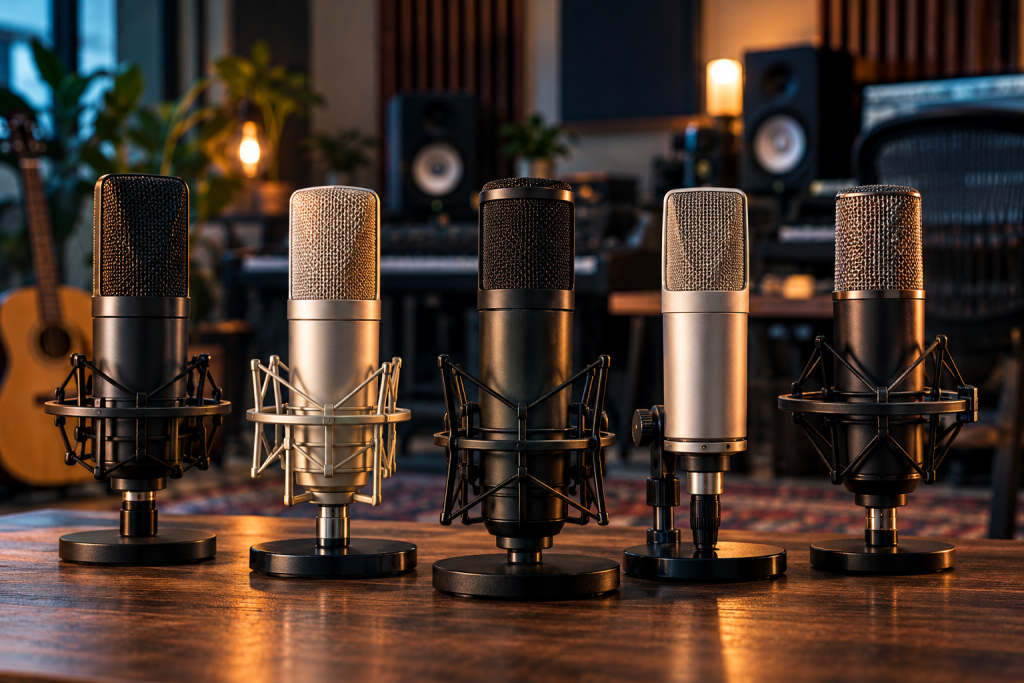
The box thumps onto the porch and you know before the tape is even cut that this is a bad idea. A condenser mic, new, for under a hundred. You ordered it out of curiosity. It is going to sound like a laser pointer.
Except some of them don’t. Some of these cheap large-diaphragm condensers have gotten genuinely good, and if you’re recording vocals, acoustic guitar, or a podcast from a home setup, they can carry your recordings further than the price tag suggests. Here’s the thing the budget mic hunt keeps proving: a good microphone shapes the tone of your voice, captures its nuances, and makes your vocals sit better in the mix from the start. A chief engineer at a professional mixing house puts it bluntly: 90% of your vocal quality comes from your mic, and the rest is mixing.
Start there, because it resets the whole question. The mic is the most important piece of gear in your recording setup, not the interface, not the plugins, not the computer. A bad-sounding mic can’t be fixed later, no matter how good your processing is.
But cheap is not the same as bad, and expensive is not the same as good. A $500 mic through a $100 interface will usually beat a $100 mic through a $500 interface. The mic shapes your raw sound first. So these five are the ones worth holding in your hand.
The Magnificent One
Before the five, the mic that has done more for home vocals than almost anything else: the Audio-Technica AT2020.
It is a small-diaphragm condenser in a large-looking body, and its character is clean and honest. No low-end bump, no treble sizzle. It captures what the room and the voice do and hands it back. That honesty divides people. If your room is untreated and your voice is bright, the AT2020 will tell you. It won’t flatter you.
Its small diaphragm makes it a natural on acoustic guitar and percussion too, with the clinical precision you’d expect. It comes in XLR and USB versions, which matters if you’re building from zero. The USB version is a fine first mic, but the XLR version through a clean interface is the better long-term purchase.
Verdict: the safest first condenser for the money. If you need a more flattering voice sound, the next two are the argument.
The Big Warm Voice
The Rode NT1 has been the default home-studio large-diaphragm condenser for over a decade, and it has earned the patience people give it.
It is warm and full in the low mids with a gentle top. Voices sound like voices rather than microphones. The self-noise is famously low, which makes it usable on quiet sources and close-miked vocals where cheaper mics hiss through the gaps. That low-noise reputation built the NT1’s career.
The classic catch is that a warm mic on a warm voice can turn muddy, and it doesn’t hide a room. In a reflective space, the warmth becomes the sound of your walls. Use it with some absorption behind you. The newer NT1 5th Generation adds both XLR and USB outputs, which is a genuinely useful hybrid for podcasters and singer-songwriters who want to start simple and upgrade the interface later.
Verdict: if your voice leans thin or hard, this one softens it. If your voice is already dark, look for something brighter.
The Character Pick
The AKG P220 is the budget large-diaphragm model in AKG’s Perception line, and it has a bit more personality than the price would suggest.
It lands on the brighter side of neutral, with a slight presence lift in the upper mids that makes voices cut through a mix without much help. That same lift is why it’s often recommended for spoken word and podcasting. The cardioid-only pattern and a simple low-cut switch keep it easy to use. It is not as quiet as the NT1 and not as neutral as the AT2020, and the top end can get glassy on very bright sources.
Verdict: a sensible first condenser for voices and acoustic instruments if you like a little edge. Not the choice for a dark voice you’re trying to smooth.
The Cheap Knockout
The Behringer B-1 is the one you bought out of curiosity. It’s a large-diaphragm condenser for the price of a decent meal, and the quality gap between it and mics at twice the price is much smaller than it used to be.
It is bright and open with a strong presence peak, which makes it sound expensive on first listen. It can also get harsh and sibilant quickly, and its self-noise is on the higher side, which means quiet, intimate sources will reveal hiss and a slightly grainy texture. The build is lighter than the Rode, and the shock mount accessory is worth getting.
Verdict: an excellent learning tool and a real option for demos and streaming. It flatters the wrong sources and struggles on the quietest ones. Buy it to hear a bright condenser, not to make your final record.
The Sleeper
The sE Electronics X1 S is the least famous name here and the one most likely to surprise you.
It has a clean, slightly scooped character that sits between the AT2020’s neutrality and the AKG’s brightness, and it handles high SPL well, which makes it usable on louder sources like guitar cabinets and drums as well as vocals. It comes in a metal case with a shock mount, which is the sort of kit you usually pay extra for. The tonal personality is not as distinct as the Rode’s, and some voice types will find it a touch plain.
Verdict: the flexible all-rounder if you can only buy one serious condenser and want options beyond vocals.
How to Actually Decide Between Them
Here’s where the budget hunt goes wrong. People look at five condensers from different brands and assume they have options. They don’t. That’s five versions of one character.
What you want is contrast: a bright mic, a dark mic, a neutral one, and a dynamic for the untreated room. If you are choosing between these five, listen for how your voice reacts, not the logo on the body.
Then test properly. You need about an hour to compare five or six mics. Spend ten to fifteen minutes on each, recording the same phrase at the same distance and the same preamp gain. Many retailers allow returns within a trial window, which is enough to record the same part through each and keep the comparison fair. If you can’t rent or return, a studio with the mics on your list can solve it in one session. Let the studio know which mics you want in advance.
One trap: don’t choose on a soloed vocal. Record the same performance through each, match the levels, and listen in the context of a track. The mic that sounds richest alone is often the one that fights for space in a mix.
The Room Runs the Show
The thing nobody wants to hear: the room changes the recording more than the mic choice will. Reflections, background noise, and room resonance can seriously distort a vocal tone, and a modest condenser with some acoustic treatment will beat an expensive microphone in a bare room, every time.
That’s also why a dynamic often wins in an untreated space. Its tighter pattern rejects room reflections, and less room in the recording is usually worth more than extra detail. A condenser in a treated room, a dynamic in an untreated one. If your bedroom is echoey, buy a dynamic and a couple of panels before you spend more on a condenser.
The preamp matters less than the mic and far less than the room. A clean modern interface preamp is fine for most sources, and preamp character only becomes a real variable once the room and the mic are already right. Get phantom power on your interface, which any combo-jack interface with XLR inputs provides, and start there.
What to Spend
Spend on what shapes the raw sound, which is the microphone. But split the budget rather than maxing the mic. A reasonable condenser, a clean interface, and some acoustic treatment beats an expensive microphone in a bare room. And you’ll probably only buy a good mic once. Get it right and it’ll last decades, which is a better reason to test carefully than any spec sheet.
If you want the short list: the AT2020 for honesty, the NT1 for warmth and quiet sources, the P220 for a little presence, the sE X1 S for flexibility, and the B-1 as the cheap way to learn what a bright condenser sounds like. Then point your money at the room. That’s where the next real improvement is.